
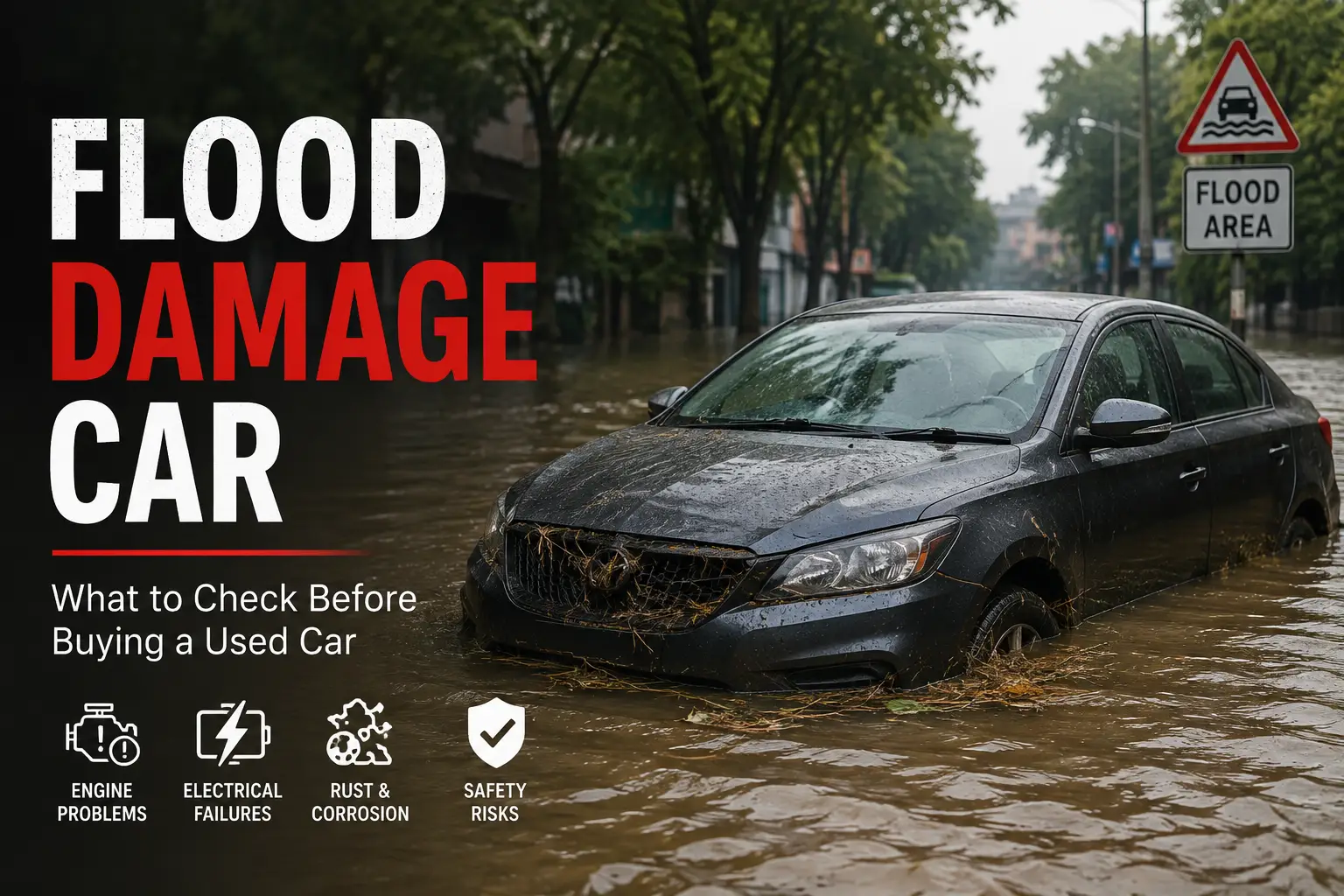
Buying a used car can be a smart financial decision, but it also comes with certain risks. One of the most overlooked dangers is purchasing a flood-damaged vehicle. Every year, heavy rains and floods affect thousands of cars across India. While many of these vehicles are declared damaged by insurance companies, some are repaired and eventually find their way back into the used car market.
At first glance, a flood-damaged car may appear perfectly normal. Fresh upholstery, a polished exterior, and a thorough cleaning can hide signs of previous water damage. However, the long-term consequences can be serious, ranging from electrical failures and corrosion to expensive repair bills.
Why Flood Damage Is a Serious Concern
Modern vehicles rely heavily on electronic systems. When water enters the engine bay, cabin, or electrical components, it can cause damage that may not become visible immediately. Problems such as malfunctioning sensors, electrical short circuits, power window failures, infotainment issues, and warning lights can appear months after the purchase.
In severe cases, flood damage can even affect the vehicle's safety systems, including airbags and braking components.
How Flood-Damaged Cars Reach the Used Car Market
After a flood, some damaged vehicles are repaired and resold. While many sellers disclose the vehicle's history honestly, others may not provide complete information. As a result, buyers can unknowingly purchase a car that has suffered significant water damage in the past.
This is why a careful inspection is essential before finalizing any used car purchase.
Signs to Look For
Before buying a used vehicle, pay attention to these common warning signs:
A damp or musty smell inside the cabin.
Water stains on seats, carpets, or the roof lining.
Rust under the seats or around door hinges.
Corrosion on battery terminals and electrical connectors.
Moisture inside headlights or taillights.
Recently replaced upholstery in an otherwise older vehicle.
Electrical features that do not work consistently.
Protect Yourself Before Buying
A professional pre-purchase inspection can help identify hidden issues that may not be visible during a test drive. Buyers should also request service records, verify insurance history whenever possible, and thoroughly inspect the vehicle before making a decision.
Final Thoughts
A lower price can be tempting, but a flood-damaged car may cost far more in repairs and maintenance over time. Spending a little extra time on inspection and verification can help you avoid costly mistakes and ensure a safer, more reliable ownership experience.
When buying a used car, knowledge is your best protection. Always inspect carefully, ask questions, and never rush into a deal that seems too good to be true.
